


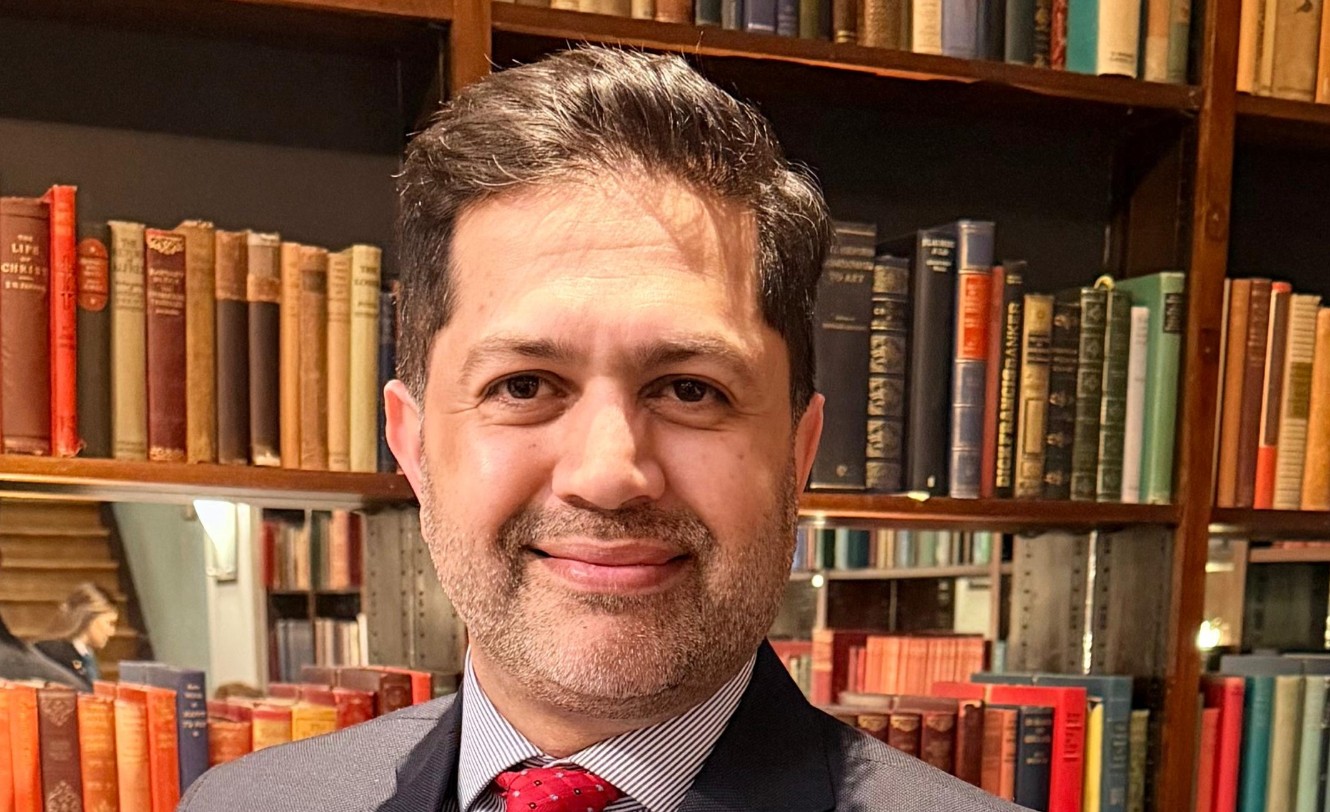
Nasir Khan MBE, Executive Director at Muslims in Rail, writes about why accountability, not awareness, is the real challenge when it comes to tackling violence and safety-related incidents against women and girls on the transport network.
The rail industry has made important strides in recognising violence against women and girls as a serious safety issue. Campaigns, reporting routes and bystander messaging have helped move the conversation from silence to visibility. Yet growing evidence shows that awareness alone is insufficient. For many women, particularly Muslim women, the issue is not whether policies exist, but whether accountability is visible, trusted and effective.
Accountability in this context is not about blame. It is about ownership, system design and follow-through. It concerns whether harm is responded to consistently, whether staff feel confident to intervene, and whether those affected believe reporting will lead to action.
1 What the evidence tells us
The Muslim Census × Muslims in Rail [1] study, the largest national survey of Muslim experiences on UK public transport, surveyed 1,155 Muslims across the country. Its findings are stark and should concern anyone responsible for safety and governance in transport.
More than one in three Muslims (36.1 per cent) report feeling unsafe using public transport. Among Muslim women, this rises to 45.3 per cent, over five times higher than the national average for women. These figures are not abstract perceptions; they reflect lived experience.[2]
Over a third of Muslim women reported direct experiences of Islamophobic or racist abuse while travelling, with a similar proportion witnessing abuse directed at others. Respondents described incidents including hijabs being violently pulled, being spat at, followed, surrounded by groups of men, shouted at with “terrorist” slurs, and filmed without consent. In the most severe cases, women reported being urinated on while travelling, bottles smashed over their heads, and being chased through stations.
One respondent described being mocked with bomb noises while other passengers looked away. Another described repeated tugging of her hijab on a crowded service, with no intervention. These are not isolated incidents; they are patterns.
2 The trust gap: Why reporting alone is not enough
Despite the severity of these experiences, only 12.5 per cent of incidents are formally reported. Among those who do report, 69 per cent say they do not believe their report was taken seriously. This creates a profound accountability gap.
When reporting systems are perceived as complex, overly detailed or unlikely to lead to meaningful outcomes, people disengage. Under-reporting then obscures risk, giving organisations a false sense of safety performance. In safety terms, this is a classic system failure: risk exists, but signals are not surfacing.
As discussed in recent engagement with Network Rail leadership, under-reporting should be treated as a leading indicator of loss of confidence, not as an absence of harm.
3 Fear changes behaviour and limits mobility
The consequences of this accountability gap are tangible. Nearly 70 per cent of Muslim women report changing how they travel due to safety concerns. This includes avoiding certain routes or times, altering clothing, switching to private transport or reducing travel altogether.
During periods of heightened political tension, such as far-right demonstrations, 96.3 per cent of Muslim women feel less safe and 90.7 per cent change their travel plans. Public transport, intended to be a public good enabling access to work, education and social life, becomes instead a source of exclusion.
This is not only a social issue; it is an economic and operational one.
4 From policy to practice: What accountability looks like
Recent discussions with Network Rail highlighted several practical levers that can move the industry from awareness to accountability.
First, data must be used more deliberately. Safety and incident data should not sit passively in systems; it should inform decision-making and, where appropriate, be published to demonstrate outcomes. Transparency builds confidence, for staff and customers alike.
Second, policies must be tested against real-world experience. A recurring question raised was whether safety and security policies are genuinely tested with the people they are designed to protect. Engagement with lived-experience organisations such as Muslims in Rail provides a practical mechanism to stress-test policy against operational reality.
Third, reporting systems must be proportionate and trusted. Overly complex processes discourage use, particularly in moments of distress. Simplification, clarity and visible follow-up are essential if reporting is to function as an accountability tool rather than a procedural exercise.
Fourth, frontline staff confidence is critical. RMT insights referenced during discussions highlighted the pressures faced by staff on the frontline. If staff lack confidence, clarity or backing, customers will feel it. Confidence is built through training, clear authority to act, and organisational support when intervention occurs.
Fifth, accountability must be consistent across the system. Rail users do not distinguish between Network Rail, TOCs or contractors. Alignment with Rail Delivery Group and operating companies is essential to avoid fragmented standards and uneven responses.
Finally, contextual risks must be acknowledged. Large events, alcohol-related behaviour and crowd dynamics can significantly elevate risk. These factors must be actively considered in safety planning, rather than treated as background noise.
5 Why faith-based harassment must be explicitly named
One of the clearest lessons from the evidence is that harassment is not experienced in a single dimension. For Muslim women, gender-based violence and faith-based harassment intersect. Campaigns that address sexual harassment but remain silent on Islamophobia unintentionally exclude those most at risk.
What is not named is not challenged. Accountability requires clarity.
6 Conclusion: Accountability is a system choice
The rail industry already understands safety culture. It understands that risk does not disappear because it is uncomfortable, and that under-reporting is itself a warning sign. The challenge now is to apply that same rigour to personal safety, dignity and inclusion.
The evidence is clear. Muslim women experience disproportionate harm on public transport. Reporting is low because trust is low. Behaviour changes because fear is real.
Accountability means using data, listening to lived experience, simplifying reporting, supporting staff, aligning the system and being transparent about outcomes. It means moving from posters to practice.
Public transport must be safe for all. Until Muslim women can travel without fear, accountability remains unfinished.
[1] Muslims in Rail is a national network of professionals drawn from leading rail and transport organisations. Motivated by our faith, we are committed to connecting, growing and inspiring people working or seeking a career in the rail industry. MIR serves as a not-for-profit social enterprise. Further details available at www.muslimsinrail.org
[2] The full report can be read here: https://muslimcensus.co.uk/muslim-safety-on-public-transport


 0113 2082620
