


The Chief Executive Officer of HS2 has said there is no chance of the high speed rail line opening any earlier than 2035 without taking risks. It was one of a series of questions that Mark Wild OBE answered at the Railway Industry Association’s Annual Conference.
“In April 2020 we said this would cost £40 billion and take 10 years and the civil engineering would take five years and that has been proven to be incredibly optimistic,” he said. “We’ve done 70 per cent of the civil engineering and we aim to complete the civil engineering in 2029 between Old Oak Common and Curzon Street and aim to start laying the track in April 2030, or maybe a bit earlier.
“Opening in 2035 is a moonshot, 2034 completely impossible. It could be later if we don’t get the civil engineering finished. There’s no way of speeding this up without taking crazy risks. A way to speed it up would be to start the systems without the design, something we’re not going to do.”
Mark came on board HS2 in December 2024 appointed as part of a series of reforms across the project aimed at bearing down on costs and safely delivering the scheme on time, in line with recent scope changes announced by the Government. He said he is nearing the end of the reset of the project.
“My job is to create the conditions that start in HS2 Limited to get the best out of the supply chain, removing the bureaucracy and stopping the second guessing,” he said. “I’ve got to say, in my two years, I have felt nothing but backing from the Government, from the Department for Transport, and the brilliant people in HS2 Limited.
“But I do recognise the past still lives amongst us a bit, and the minute we leave reset in the spring of next year, I am determined we do this together and I do recognise the client has the primary role in that.”
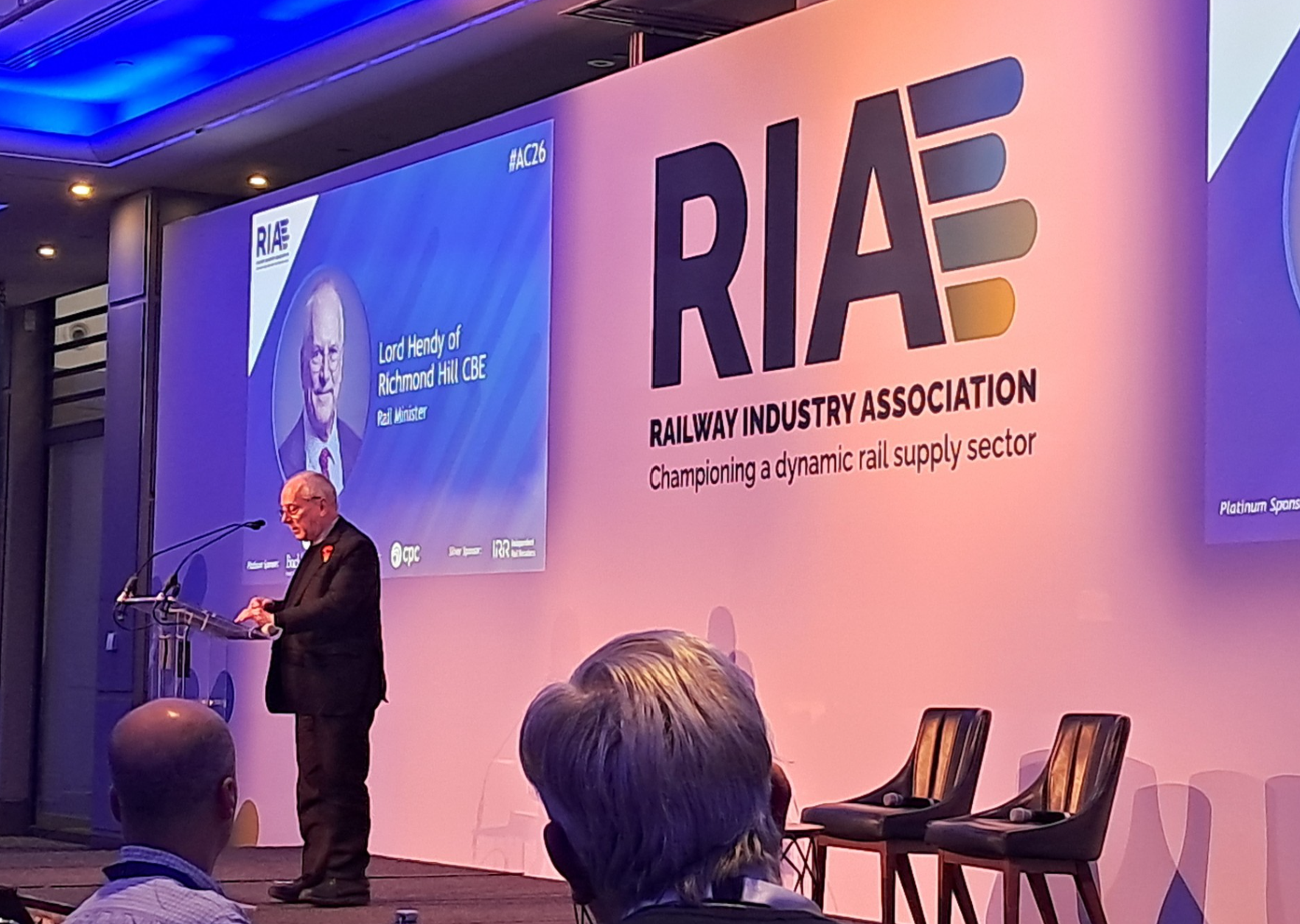
The first day of RIA’s award-winning two-day Annual Conference combined keynote speeches, panel discussions, interview sessions, spotlight exhibitor pitches and unique networking opportunities. This year’s theme is Connected for Change: Shaping Tomorrow’s Railway.
Kicking off the proceedings, Rail Minister Lord Hendy of Richmond Hill CBE spoke about the journey ahead highlighting the Rolling Stock and Infrastructure Strategy, Long Term Rail Strategy and the Railways Bill.
On the latter, he said the Bill is going through the House of Lords, with Lord Hendy having attended seven committees, considering 453 amendments, with the report stage starting this month with the Bill potentially getting Royal Assent around Christmas
“At the end of this process, still 60 per cent of railway turnover will be in the private sector, and actually I believe that what we’re going to do will produce better outcomes, that will benefit passengers and freight customers better, that will reduce subsidy,” he said. “It will deliver investment for you to contribute to, and give you a better, more secure future in an industry I’m so proud to be part of.”
Lord Hendy also spoke about the many projects taking place, including HS2, East West Rail, Transpennine Route Upgrade and Northern Powerhouse Rail.
“It’s a very clear signal that the Government is serious about the future growth, we’re serious about investment, we’re serious about delivery and we’re serious about giving companies in this industry the confidence to innovate and grow,” he said.
“I don’t think there’s ever been such a long-term commitment to expenditure on a better railway since the end of the Victorian era, and none of that is possible without the expertise, innovation and commitment of the rail supply chain, so I’m grateful to everybody working hard on these projects.”
Following Lord Hendy was Richard Holden MP, Shadow Secretary of State for Transport, who described the Railways Bill as a “bad Bill” saying it produced “more questions than answers” adding that more clarity and certainty was needed.
He said: “My party, the Conservative Party, will continue to make the case for a railway that grows, a railway that welcomes private investment that protects competition and open access. It gives manufacturers the confidence to invest in their workforce and provides a credible pipeline of infrastructure improvements.
“Ultimately we are here to provide, we are not here to provide a service for those who run the railways. We are here to provide a service for those who use the railways and we have to also be there and deliver value for the taxpayers who subsidise them.
“Our focus should remain on the passengers trying to get to work on time, the family trying to see loved ones, the businesses trying to get its goods to market, and the manufacturers deciding whether to invest in Britain. Those are the people whose interests should be at the heart of our rail policy and if we want more passengers, more freight, more investment and more skilled jobs, then we have to give the industry the certainty it needs to deliver.
“Rail has a vital role to play in getting Britain working again by getting Britain moving again connecting communities, supporting business and driving growth across our country. That is the ambition that I have for British Railways and it’s the ambition the Conservative Party will continue to champion.”
There were hundreds of people at the Leonardo Royal Hotel London Tower Bridge at day one of this year’s RIA Annual Conference on Wednesday (4 November).
Darren Caplan Chief Executive at RIA highlighted a new survey of railway business leaders, delivered by independent market research company Savanta, which has revealed a significant improvement in business confidence going forward, compared to the historically low confidence levels reported this time last year.
He said: “It is an exciting time of change. By working in partnership, we, the supply sector, will be able to play a strong and proactive role in shaping the railway, so it is well positioned to make a vital contribution to growth and jobs in communities right across the country.
“Please be assured that we at RIA will work passionately to make the case that we can achieve as an industry together.”
This year’s conference concludes on Thursday (5 November) with an agenda which includes a live Green Signals podcast with Richard Bowker CBE and Nigel Harris who will be interviewing Chris Gibb; and keynote speeches from Steve White (South Eastern Railway and the designate Managing Director for the Integrated Greater Thameslink Railway); Tricia Williams (Managing Director at Northern).
There will also be a fireside chat and Q&A with Alex Hynes (Chief Executive Department for Transport Operator) and Jeremy Westlake (Chief Executive at Network Rail). Platinum sponsor of this year’s event is Buckland Rail, Gold Dinner sponsor cpc, Silver Sponsor Independent Rail Retailers, and partners Rail Business Daily and Railway Mission.


 0113 2082620
