


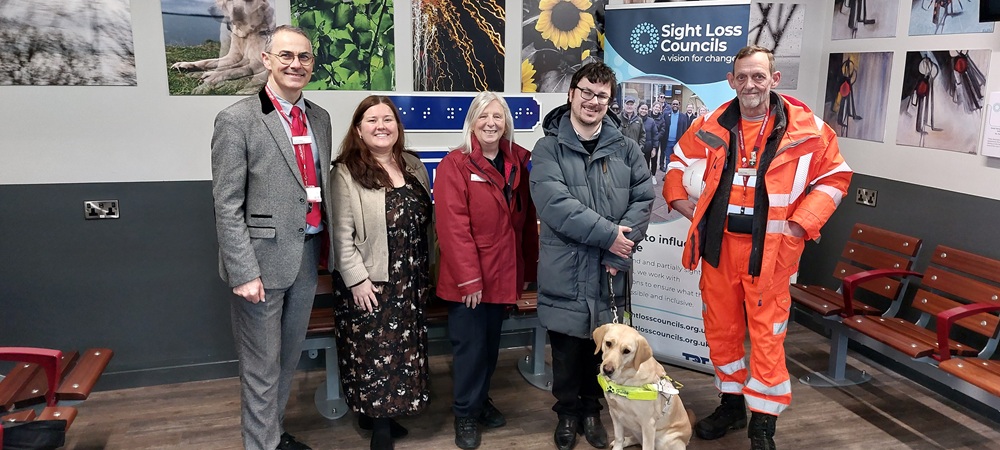
Art created by blind and partially sighted people has been unveiled at Great Yarmouth rail station.
Greater Anglia, which operates the station, said the new exhibition shone a spotlight on the realities of living with sight loss.
Led by Essex Sight Loss Council, it opened to the public on 28 January and builds on a successful project which was launched at Norwich and Colchester railway stations last year.
Titled ‘Do You See What I See?’, the exhibition showcases artwork that explores the different ways sight loss affects people’s perception of the world. Greater Anglia revealed that each piece reflects the lived experiences of blind and partially sighted people, offering visitors a deeper understanding of their day to day realities.
They also challenge common misconceptions about how blind and partially sighted people create, interpret, and engage with art – highlighting the creativity, insight, and innovation that emerge when lived experience leads the narrative.
The exhibition was supported with funding from Greater Anglia’s Customer and Community Improvement Fund, which aims to support local, community-focused rail improvements across its network.
The grant was awarded to Thomas Pocklington Trust for an educational art project at Great Yarmouth station. Sight Loss Councils, funded by Thomas Pocklington Trust, are regional groups led by blind and partially sighted people. Together, they work with organisations to ensure what they do is accessible and inclusive.
The project at Norwich and Colchester has been shortlisted for a national Community Rail Award.
Greater Anglia’s Partnerships Manager, Scott Dolling, said: “We are pleased to support this initiative to help raise awareness and increase understanding of what the world can look like for blind and partially sighted people. Great Yarmouth is a busy station, so I hope that the artwork will be seen by many people, offer food for thought and help raise the profile of Thomas Pocklington Trust, Sight Loss Councils and the valuable work that they do.
“We are always looking to enhance the role of the railway in support of the community it serves, and our Customer and Community Improvement Fund is a way of supporting further locally focused enhancements in line with community needs.”
Alex Ramzan, Essex Sight Loss Council member, says: “As a member of the Essex Sight Loss Council, I am thrilled to see our art exhibition – ‘Do You See What I See?’ – being embraced by Greater Anglia and in place now at Great Yarmouth Railway Station. The artwork raises awareness around the experience of sight loss in a creative way. It also celebrates art that is produced and created by blind and partially sighted people.”
Lee Mercer, another SLC member, added: “When you live with sight loss, how you perceive the world around you can be uniquely different, in ways that others may not even realise. We don’t all just see “nothing”, and viewing this collection will hopefully help people understand the range and variety of our experience.”
Greater Anglia’s Customer and Community Improvement Fund was created to support initiatives that deliver community benefits and enhance rail’s positive role in society. Ideas can be put forward by local organisations or bodies, such as community rail partnerships, station adopters, local authorities or parish councils, community groups, charities, or other stakeholders along the routes served by the train operator.
Sight Loss Councils make transport accessibility a priority because blind and partially sighted people shared with them that it’s one of the issues that matters to them most. Across the country, they work directly with transport providers to remove barriers and increase access. This project is a celebration of the work they have done in collaboration with Greater Anglia to improve accessibility for BPS passengers.
‘Do You See What I See?’ brings together artwork created by, or in collaboration with, blind and partially sighted people. Among the highlights are railway themed heritage signs designed by blind artist Clarke Reynolds, featuring braille and tactile lettering that invite visitors to experience art through touch as well as sight.
Additional pieces by artist Lindsey Whitelaw were produced from detailed descriptions shared by blind and partially sighted individuals, capturing the unique and personal ways they interpret their surroundings.


 0113 2082620
