


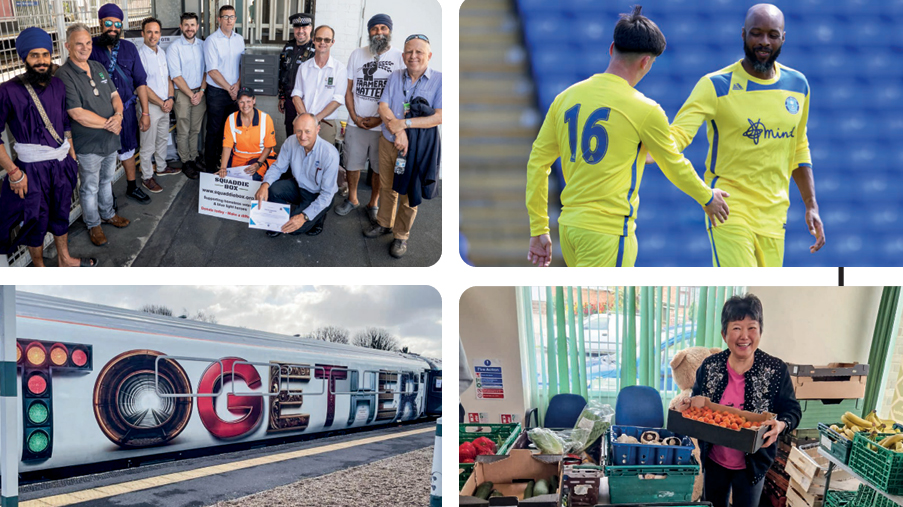
Greater Thameslink Railway (GTR) has published its latest Social Impact Report, which highlights its efforts to help people access employment, travel confidently, stay safe and connect with support services across London and the South East.
The report shows that during 2025/26, frontline railway colleagues carried out 203 life-saving interventions, supported 202,843 assisted journeys for passengers who needed accessibility assistance, and helped expand opportunities for hundreds of people through apprenticeships, employability programmes, and community partnerships.
GTR said the findings demonstrated the wider role railways play in supporting inclusive growth by connecting people to jobs, education, opportunities and support, while helping build stronger, safer and more inclusive communities.
Myriam Walburger, Corporate Affairs Director at GTR, said: “Railways do far more than connect people with places. We help create opportunity, strengthen communities, and contribute to growth that is accessible, inclusive and felt across our network.
“I’m particularly proud of the social value and impact we created by working closely with communities, charities, local authorities and other partners.
“Together, we help people build confidence, improve mental health, open up pathways into employment and make stations safer and more welcoming. What makes this work so meaningful is seeing the positive change in our communities, and I’d like to thank all the organisations that support us in delivering lasting social value beyond the railway.”
Tom Hall, Social Sustainability Principal at The Rail Safety and Standards Board (RSSB), said: “GTR is successfully embedding social impact into how they run the railway. Their wide range of programmes, interventions and partnerships are benefiting communities, supporting employment and education, improving inclusion, and strengthening mental health and wellbeing.
“It is a great example of how the rail industry can better understand, measure and communicate its wider contribution to society.”
Helping people when they need it most
GTR said the report highlighted its ongoing commitment to suicide prevention and mental health support.
During the year, frontline railway staff reportedly made 203 life-saving interventions, while nearly 700 colleagues undertook suicide prevention training and safeguarding programmes designed to help identify and support vulnerable people.
GTR also continued its partnership with Mind, with more than 3,500 colleagues taking part in fundraising and awareness activities, raising £75,000 for the charity. Mental health campaigns across the network reached more than 14 million people.
Opening doors to jobs and skills
The railway operator added that, in the last year, it had expanded programmes designed to help people access employment and develop new skills.
A total of 708 colleagues were completing apprenticeships during the year across 18 different programmes, while GTR continued working with schools, colleges and community organisations to introduce young people to careers in rail.
This included STEM activities engaging hundreds of primary school pupils and employability programmes supporting people looking for work.
The company plans to build on this work through the Rail Youth Promise, creating more pathways into employment and training for young people across its network.
Working with smaller businesses
GTR has also revealed that it had awarded 70 per cent of its contracts in the last financial year to small or medium enterprises (SMEs), with total spending reaching more than £109 million.
Making rail more accessible
GTR added that the report highlighted growing demand for accessible travel.
During 2025/26, it assisted 202,843 passengers, a 23 per cent increase on the previous year, including more than 139,000 turn-up-and-go journeys (up 40 per cent). More than 2,200 customer-facing colleagues received disability equality training.
The business has installed innovative accessibility technologies, including Auracast hearing assistance technology at Brighton station and expanded its Try a Train programme to help disabled passengers build confidence travelling independently.
Focus on environmental sustainability
GTR reported a 12 per cent reduction in emissions produced by itself and its suppliers, as well as reducing energy use across stations, offices and depots. A novel approach to monitoring train energy use also helped save £500,000.
Safer stations and stronger communities
The operator said that community safety remained a major focus throughout the year.
GTR completed the rollout of more than 1,500 body-worn cameras across frontline teams, contributing to 727 fewer verbal assaults against colleagues wearing the devices. The operator also reported a five per cent reduction in anti-social behaviour incidents and continued targeted work with schools, local authorities and British Transport Police.
Across the network, station volunteers and community rail partnerships contributed thousands of volunteer hours helping improve stations, support local tourism and create welcoming community spaces.
Through its Your Station, Your Community programme, GTR invested £480,000 in 26 community-led projects supporting people experiencing mental health challenges, domestic abuse survivors, young people facing barriers to employment, people with disabilities and initiatives tackling social exclusion and anti-social behaviour.
Benefits quantified
The industry-wide Rail Social Value Tool, developed by the Rail Safety and Standards Board (RSSB) and Network Rail to understand and evidence social impact, demonstrates that these projects together generated more than £208.6 million in independently validated social value, equivalent to approximately £352 of social value for every £1 invested.
Looking ahead
GTR said it would continue to expand community partnerships, strengthen its mental health work with Mind, increase opportunities for young people through the Rail Youth Promise and ensure social value wasembedded into major procurement decisions.
From 2026/27, social value will account for 10 per cent of the evaluation weighting for contracts worth more than £5 million.


 0113 2082620
